You can come to Wat Pa Tam Wua without previous meditation experience or an advance booking. Arrive at Information between 06:00 and 16:00 with your original identity document. You will receive accommodation, white clothes and bedding, then join the next activity. Plan for at least three days and two nights to settle in.

What kind of stay are you joining?
Tam Wua is a working Thai Forest monastery in Mae Hong Son province. Guests join meditation, Buddhist teachings, food offerings, chanting and shared work. You remain a layperson and can come from any religious background.
The Thai Forest tradition is part of Theravada Buddhism and emphasises meditation, simple living and ethical conduct. You will hear “Buddha, Dhamma and Sangha”: the awakened teacher, his teaching and the monastic community. Chanting and bowing often express respect for these Three Refuges.
You do not need to know every custom before arriving. Listening, being on time and learning the routine are enough to begin.
What to pack and how to plan the journey
- Original ID: a passport with valid Thai entry documentation for foreign visitors, or an original Thai ID card for Thai visitors.
- Personal essentials: towel, toiletries, underwear, medication and modest clothes for the journey.
- Practical extras: a small torch, rain protection when needed and money for return transport and personal purchases.
- Food if needed: safe supplementary food for a serious allergy or a necessary diet that the shared kitchen cannot meet.
The monastery is on Highway 1095 between Pai and Mae Hong Son. Tell your driver “Wat Pa Tam Wua” and allow extra time for the mountain road. Save the address and your onward plans offline, and let someone close to you know your intended dates.
The usual stay is 3–10 days. Aim to arrive comfortably before 16:00; a late arrival may have to wait until the following day to register.
What happens when you arrive?
- Go to Information first.
- Show your original document and complete registration.
- Listen to the explanation of the room, clothing, meals and required activities.
- Collect the supplied white clothes and bedding.
- Change and join the next session at the place you have been shown.
New guests normally start in a dormitory. A private kuti depends on availability and local priorities, so arrive ready for shared accommodation. You do not need a meditation certificate or a special food gift.
The daily rhythm you will settle into
- 05:00: personal morning meditation in your room or kuti.
- 06:30: rice offering to the monks, followed by breakfast at 07:00.
- 08:00: Dhamma talk and meditation class.
- 10:30: food offering and short talk, followed by lunch at 11:00.
- 12:50: afternoon teaching and meditation.
- 16:00: cleaning and helping around the grounds.
- 18:00: evening chanting, meditation and a Dhamma talk.
The offerings, morning and afternoon classes, and evening chanting are required for residential guests. If illness or another serious reason prevents attendance, tell Information beforehand. Arrive a little early so you can find a place without disturbing the group.
What if you have never meditated?
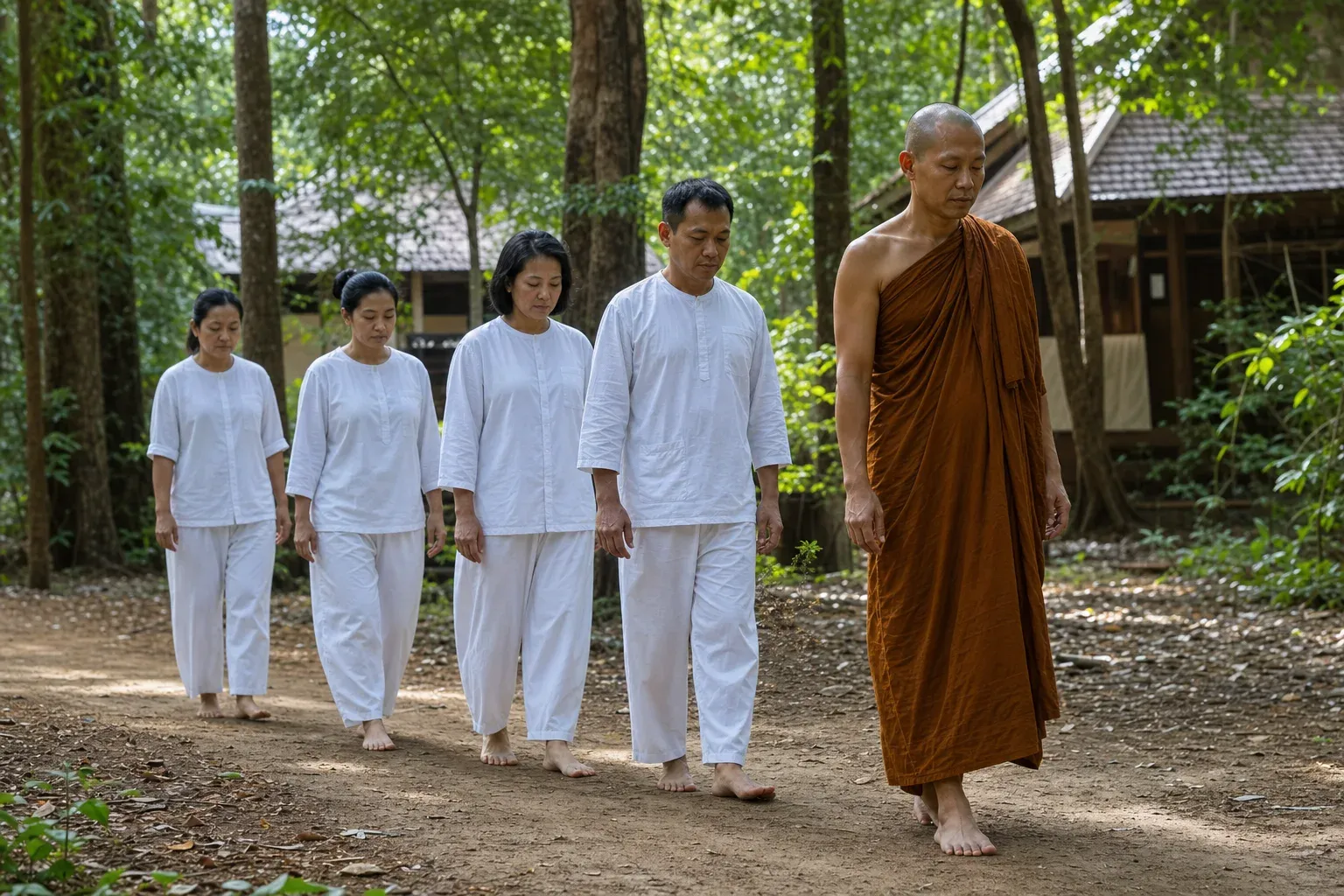
Teaching is in Thai and English and welcomes beginners. You will practise walking, sitting and lying down with attention. In walking meditation, feel yourself standing and placing each foot; in sitting, follow the instruction for natural breathing or awareness. When you notice thinking, gently return to the practice.
You do not need to stop every thought or sit cross-legged through pain. Chairs and cushions are available. Adjust your position when needed and ask about instructions you do not understand. Lying-down meditation is an instructed practice, not a substitute for sitting during chanting.
White clothes, precepts and everyday etiquette
Guests observe the Eight Precepts: avoid killing, stealing, sexual activity, lying and intoxicants, and simplify food timing, entertainment, adornment and sleeping arrangements. Tam Wua permits some limited guest flexibility, including small jewellery and occasional fruit or biscuits later in the day.
Wear the supplied white clothes, remove shoes where required and keep feet away from Buddha images and chanting books. Ask before photographing people or entering private areas. Smoking, drugs, alcohol, stealing and sexual activity are prohibited.
The cave area has its own rules: women may sit outside but are asked not to enter the caves, and everyone must leave the area by 17:00. Follow the orientation you receive on arrival.
Do you need to stay silent or hand in your phone?
Silence is encouraged but optional. A silent badge is available, and half of the dining hall is for silent eating. Quiet conversation is possible in suitable places, without drawing another guest into conversation when they want to practise.
You keep your phone or laptop. Silence it for classes and chanting, and avoid bright screens or calls around other practitioners. Finishing unnecessary messages before a session makes it easier to listen.
Food, costs and leaving the monastery
Breakfast and lunch are vegetarian; there is no full dinner. Some later refreshments may be available, but donated snacks are not always vegan. For allergies or necessary diets, bring safe food and arrange storage with Information.
Accommodation, clothes, bedding and the two meals have no required charge. Donations are optional. Keep money for transport, toiletries and personal needs, and arrange your onward journey with enough time. Before leaving, return borrowed items and leave your sleeping space clean for the next guest.