Samatha is the Buddhist cultivation of calm or tranquillity. It trains a scattered mind to settle, remain present and become collected. Samatha is not a single proprietary technique: mindfulness of breathing, loving-kindness and other meditation themes can all develop tranquillity when practised skilfully.

The Pali word samatha means calm or tranquillity. In Theravada Buddhism it describes a quality that can be developed: agitation diminishes, attention becomes less fragmented, and the mind is better able to stay with what it is doing. This collected quality supports the wider Buddhist path of ethical conduct, meditation and wisdom.
Samatha is sometimes translated as “concentration meditation,” but concentration alone can sound tense or narrow. A useful practice contains steadiness, mindfulness and ease. The aim is not to suppress every thought; it is to stop being carried away by each thought as soon as it appears.
What the practice is trying to do
Samatha is defined by its function rather than by one object or posture. With the breath, the intention is to settle and unify attention. With walking, it is to remain continuously present with the body and movement. With loving-kindness, it is to cultivate a less hostile and more settled mind. The same object can support insight when the emphasis shifts to investigating change and clinging; see Samatha vs Vipassana for that distinction.
Use a simple test: after practising, is attention a little more stable and responsive, or have you merely become drowsy or absorbed in pleasant ideas? Samatha does not require a dramatic experience. It is the patient training that makes wise attention possible.
What Samatha develops
A restless mind repeatedly leaves the present task to pursue memories, plans, worries or pleasant ideas. Samatha gathers that scattered energy. As the mind learns to return and remain, several qualities may become clearer:
- stability — attention is less easily pulled away;
- clarity — dullness is distinguished from genuine calm;
- ease — the struggle with every passing thought can soften;
- continuity — mindfulness is sustained for longer periods;
- workability — the mind is more prepared to investigate experience wisely.
This is why calm matters in Theravada practice. It is not merely a pleasant pause. A steadier mind can see more accurately, respond less impulsively and support the development of insight.
A five-minute introduction to breath practice
Use this optional outline to try a short breath practice. Five minutes is a flexible starting point; adjust the time to suit you.
- Settle — about one minute. Sit comfortably on a chair or cushion. Feel the support beneath you and let your shoulders soften. Keep your eyes gently open or closed. You do not need to hold a painful posture.
- Feel the breath — about three minutes. Notice where natural breathing is easiest to feel. Stay with the present in-breath and out-breath without making them longer or stronger. When attention wanders, recognise it and return to the next breath you can feel.
- Finish — about one minute. Feel your whole body and notice your surroundings before standing. Reflect briefly on whether you could recognise distraction and return without unnecessary force. A pleasant or thought-free session is not the measure of success.
Example: planning interrupts the breath
You notice an out-breath, then realise you have been composing a shopping list. There is no need to finish the list or argue with the thought. Recognise “planning”, let the story pause, and feel the next available breath. If the list returns a few seconds later, repeat the same gentle return. You do not need to restart the timer.
If you become sleepy, open your eyes or sit a little more upright. If you are tightening your face or shoulders to hold attention, ease the effort. Shorten or end the session if needed; steadiness does not require forcing yourself to remain still.
Wat Pa Tam Wua · https://www.wattamwua.com/samatha-meditation/
Optional guided audio in English
For spoken guidance, visit the guided meditations by Thanissaro Bhikkhu of Metta Forest Monastery and choose “12mBreath (short version)”. This is an external English-language resource, not a Wat Pa Tam Wua recording. The written outline above is an independent introduction, not an audio transcript.
The return is part of the training, not evidence of failure. Repeatedly recognising distraction and beginning again develops mindfulness and steadiness together. The Buddha’s detailed teaching in MN 118 also shows that breath practice can cultivate both calm and insight; use the Anapanasati breath-meditation guide for a careful introduction to its sixteen trainings.
Samatha is not limited to sitting
Walking meditation can also collect the mind. Instead of treating the destination as important, the practitioner knows the body standing, lifting, moving and placing each foot. Attention can rest with the whole walking body or with a clear aspect of movement, according to the teacher’s instruction.
Daily activities can support the same training. Sweeping, washing a bowl or listening to chanting becomes practice when it is done with continuity, restraint and clear comprehension. This approach is especially important in the Thai Forest Tradition, where meditation is not confined to formal sessions.
Samatha, samadhi and jhana
These terms overlap, but they should not be collapsed into one definition. Samatha is tranquillity. Samadhi is collectedness or unification of mind and, within the Noble Eightfold Path, right concentration. Jhana refers to progressively refined meditative absorptions described in the Pali discourses.
Not every quiet moment is jhana, and trying to label each experience can become another distraction. For a beginner, the practical questions are simpler: Is mindfulness present? Is the mind bright or dull? Is attention becoming less forced? Does the practice reduce unwholesome reactions rather than feed ambition or pride?
The two-jhana framework used at Wat Pa Tam Wua
The monastery’s book Walk to be the Knower uses a traditional Theravada explanatory framework that distinguishes:
- ārammaṇūpanijjhāna — “object-scrutinizing jhana,” associated in the commentaries with the meditative attainments;
- lakkhaṇūpanijjhāna — “characteristic-scrutinizing jhana,” associated with insight into conditioned experience.
This terminology is useful when it is properly situated. It is a commentarial classification of jhana, not the only way the early discourses classify samadhi. P. A. Payutto explains the distinction and its traditional definitions in Buddhadhamma: Calm and Insight. In practice, “staying with an object” should not mean clinging or becoming unaware; mindfulness and clear comprehension remain essential.
How Samatha and Vipassana work together
Vipassana means insight or clear seeing. A common explanation says that Samatha steadies the mind and Vipassana investigates experience. That is helpful as a first distinction, but the relationship is not a rigid two-step formula.
In AN 4.170, the early Buddhist texts describe insight preceded by tranquillity, tranquillity preceded by insight, and both developed in tandem. AN 4.94 advises a practitioner strong in one but lacking the other to learn from someone skilled in the missing quality. The direction is balance, not competition.
Common difficulties
Restlessness
Make the task smaller: know this breath, then the next. A comfortable posture and gentle attention are often more effective than trying to pin the mind down.
Dullness
Calm is alert, not foggy. Straighten the posture, open the eyes, practise walking, or bring more precision to the beginning and end of each breath.
Striving for a special state
Expectation pulls attention away from the present conditions that need to be understood. Notice desire for progress as another event in the mind, then return to the practice.
Fear or persistent distress
Do not force prolonged meditation through severe distress. Ground attention in the body and surroundings, shorten the session, and seek guidance from a qualified teacher or appropriate health professional when needed.
Samatha at Wat Pa Tam Wua
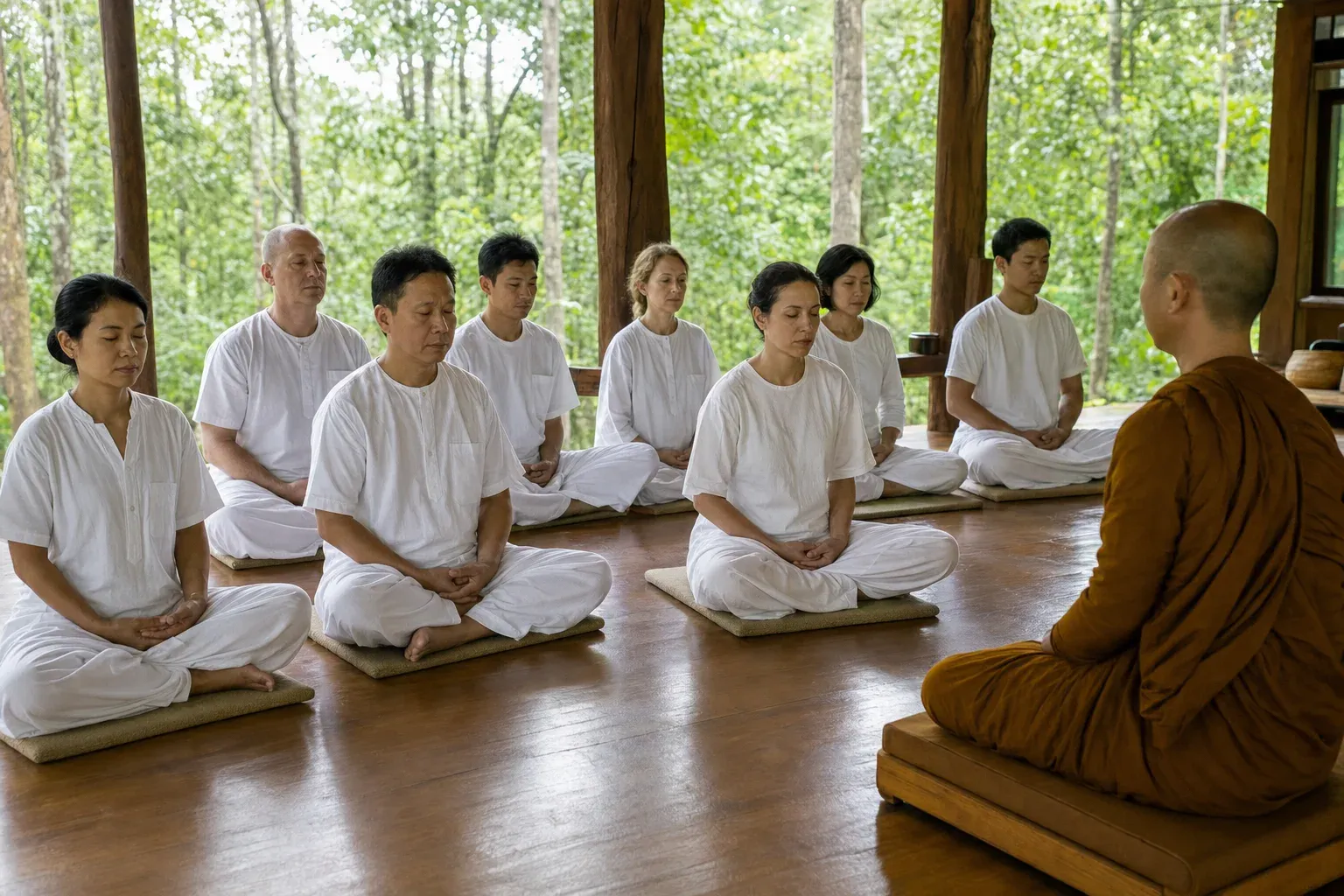
Wat Pa Tam Wua combines walking, sitting and lying-down meditation with chanting, Dhamma instruction, shared work and individual practice. The structured day provides repeated opportunities to settle the mind without treating calm as an escape from ordinary activity. Beginners are welcome, but guests are expected to attend the programme and respect the monastic setting.
Before visiting, read the current timetable, monastery rules and the practical guide to a meditation retreat in Thailand. For a direct comparison, see Samatha vs Vipassana.