Wat Pa Tam Wua is a Theravada Buddhist forest monastery in Mae Hong Son, Northern Thailand, where visitors can join a structured meditation retreat. No advance booking is required; accommodation, two vegetarian meals, white clothes and bedding are free. Residential guests normally stay 3–10 days and must arrive between 6:00 am and 4:00 pm.

A meditation retreat in Thailand can mean very different things: a commercial wellness programme, an intensive course, or a stay within a living Buddhist monastery. Wat Pa Tam Wua belongs to the third category. Guests enter an existing monastic rhythm of offerings, meditation, chanting, Dhamma teaching and shared responsibilities. The guide to a Theravada monk’s daily routine explains how that broader rhythm differs from the timetable for lay residents.
You do not need to be Buddhist or experienced in meditation. You do need to respect the religious setting, attend the required activities and accept a simple daily routine. This guide collects the practical information to consider before travelling.
What kind of retreat is this?
Wat Pa Tam Wua is not a Goenka Vipassana course, a commercial retreat package or a promise of a particular meditation result. It is an open monastery programme: the day has set activities, but there is no branded 10-day syllabus that every guest must complete. Teachers introduce calm and insight within the monastery’s Theravada practice, and visitors normally stay for 3–10 days according to the local arrangements.
That distinction helps set expectations. If you are looking for a silent course with one method, no conversation and a fixed start and finish, choose a retreat that explicitly offers those conditions. If you want to learn within a working Thai Forest monastery and can take part in its timetable, Wat Pa Tam Wua may be a good fit. The first-visit guide explains what the first day feels like in practical terms.
Three days, a week or ten days?
These are planning examples, not separate courses. Each stay follows the same daily timetable; a longer visit gives you more days to repeat the practice, not a guaranteed progression or result.
On a small screen, scroll each table sideways to compare all columns.
| Stay | Time in the routine | Travel trade-off |
|---|---|---|
| 3 days / 2 nights | A short introduction: with arrival on day 1 and departure on day 3, only day 2 is a full day between journeys. | Best when time is limited. Avoid treating a three-day trip from Chiang Mai as three full practice days. |
| About a week | Several full days to become familiar with offerings, classes, chanting and shared work. | Allow travel time at both ends; this gives more room to settle without using the usual maximum stay. |
| Up to 10 days | More repetition of the same routine, with time to bring practice questions to a teacher. | The usual maximum, not a fixed ten-day syllabus. Do not plan an extension as part of your itinerary. |
Choose arrival and departure dates before buying onward transport. For example, arriving on Monday and leaving on Sunday uses seven calendar days and six nights, with five whole days between journeys. Count travel days separately when comparing this with a course’s published dates.
Arrive at Information between 06:00 and 16:00, with a buffer for mountain-road delays. Before departure, clean your accommodation, return bedding and borrowed clothes, and sign out before 09:00. You may remain on the grounds afterward; confirm onward transport separately.
Open monastery stay or a fixed silent course?
| Your priority | Wat Pa Tam Wua | What to check in a fixed course |
|---|---|---|
| Travel dates | Arrive any day within check-in hours; usual stays are 3–10 days. | Published start and finish dates, application and full attendance requirements. |
| Silence | Silence is optional; ask at Information for a silent badge. The dining hall has a silent area and an area for quiet conversation. | Whether silence is compulsory, when it applies and how questions reach a teacher. |
| Teaching | Thai and English instruction within the monastery timetable; this is not a Goenka course. | The specific method, teaching language and whether the course follows a set sequence. |
Compare monastery stays and scheduled meditation courses
Planning information checked 5 September 2026: Arrival and departure · Visitor FAQ · Daily timetable
Wat Pa Tam Wua at a glance
| Location | Highway 1095 between Pai and Mae Hong Son, about 37 km from Mae Hong Son town |
| Cost | No required fee; the monastery is supported by donations and volunteer work |
| Booking | No advance booking |
| Check-in | Every day, 6:00 am–4:00 pm |
| Residential stay | Normally 3 days / 2 nights to 10 days |
| Teaching | Thai and English |
| Practice | Walking, sitting and lying-down meditation; chanting and Dhamma talks |
| Silence | Encouraged and available, but not compulsory |
| Meals | Vegetarian breakfast and lunch; no regular evening meal |
| Open | 365 days a year |
How to judge whether this retreat suits you
Rather than comparing labels, ask what conditions you actually need. Wat Pa Tam Wua is likely to suit you if you want Buddhist practice in a monastery, can participate in a fixed schedule, and are comfortable with simple accommodation and communal life.
Consider another setting if you need a private room guaranteed in advance, a fully customised timetable, specialist dietary catering, clinical support, or strict silence enforced for every participant. Wat Pa Tam Wua is welcoming, but it is not a hotel, spa or medical programme.
- Religious context: guests chant, bow, observe precepts and interact respectfully with monks.
- Commitment: highlighted classes and offering ceremonies on the timetable are mandatory.
- Comfort: dormitories are standard; private kutis depend on availability, length of stay and commitment.
- Community: cleaning and practical help are part of the day.
- Silence: you may practise silently, but the entire monastery is not under enforced Noble Silence.
What meditation is practised?
The programme includes Samatha, the cultivation of tranquillity, and Vipassana, the cultivation of insight. These are complementary qualities rather than competing retreat brands. Group classes use three postures:
- walking meditation to sustain awareness while the body moves;
- sitting meditation to develop steadiness and investigate experience;
- lying-down meditation to maintain mindfulness in a restful posture without drifting into sleep.
Dhamma talks and chanting place meditation within the wider Theravada path of ethical conduct, mental cultivation and wisdom. The monastery identifies itself with the Thai Forest Tradition, which emphasises practice, simplicity and monastic discipline.
The daily timetable
The schedule may be updated, so check the official timetable shortly before travelling. The current day is organised as follows:
| Time | Activity |
|---|---|
| 05:00 | Individual morning meditation in your kuti or room |
| 06:30 | Rice offering to the monks |
| 07:00 | Breakfast |
| 08:00 | Morning Dhamma talk and meditation class |
| 10:30 | Food offering to the monks |
| 11:00 | Lunch |
| 12:50 | Afternoon Dhamma talk and meditation class |
| 16:00 | Cleaning and helping around the monastery |
| 17:00 | Free time |
| 18:00 | Evening chanting, meditation and Dhamma talk |
| 20:00 | Individual meditation or refreshments and rest |
| 22:00 | Rest time |
The rice offering, morning class, food offering, afternoon class and evening programme are mandatory for residential guests. If illness or another serious reason prevents attendance, speak with the information desk in advance.
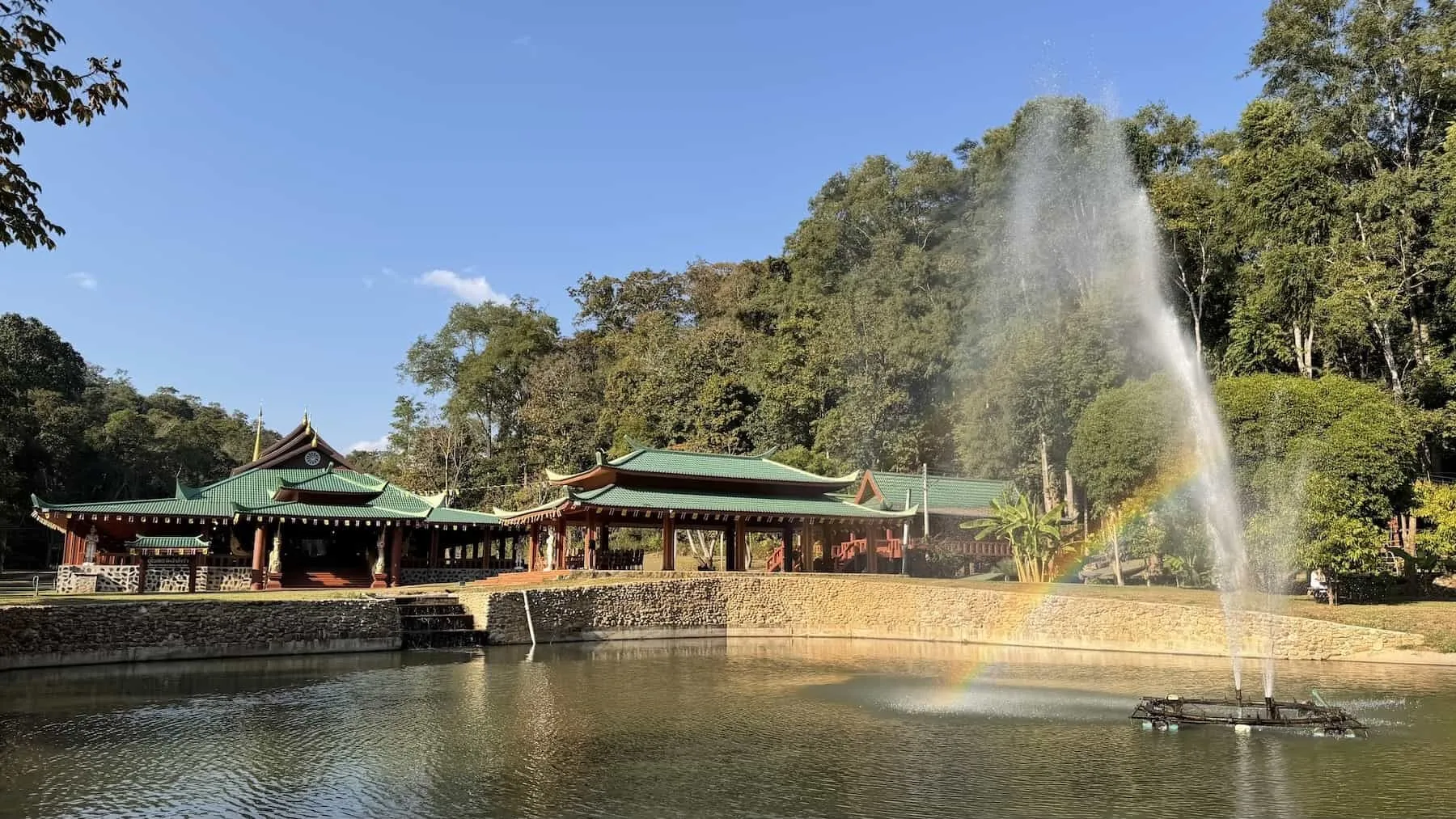
Accommodation and what is provided
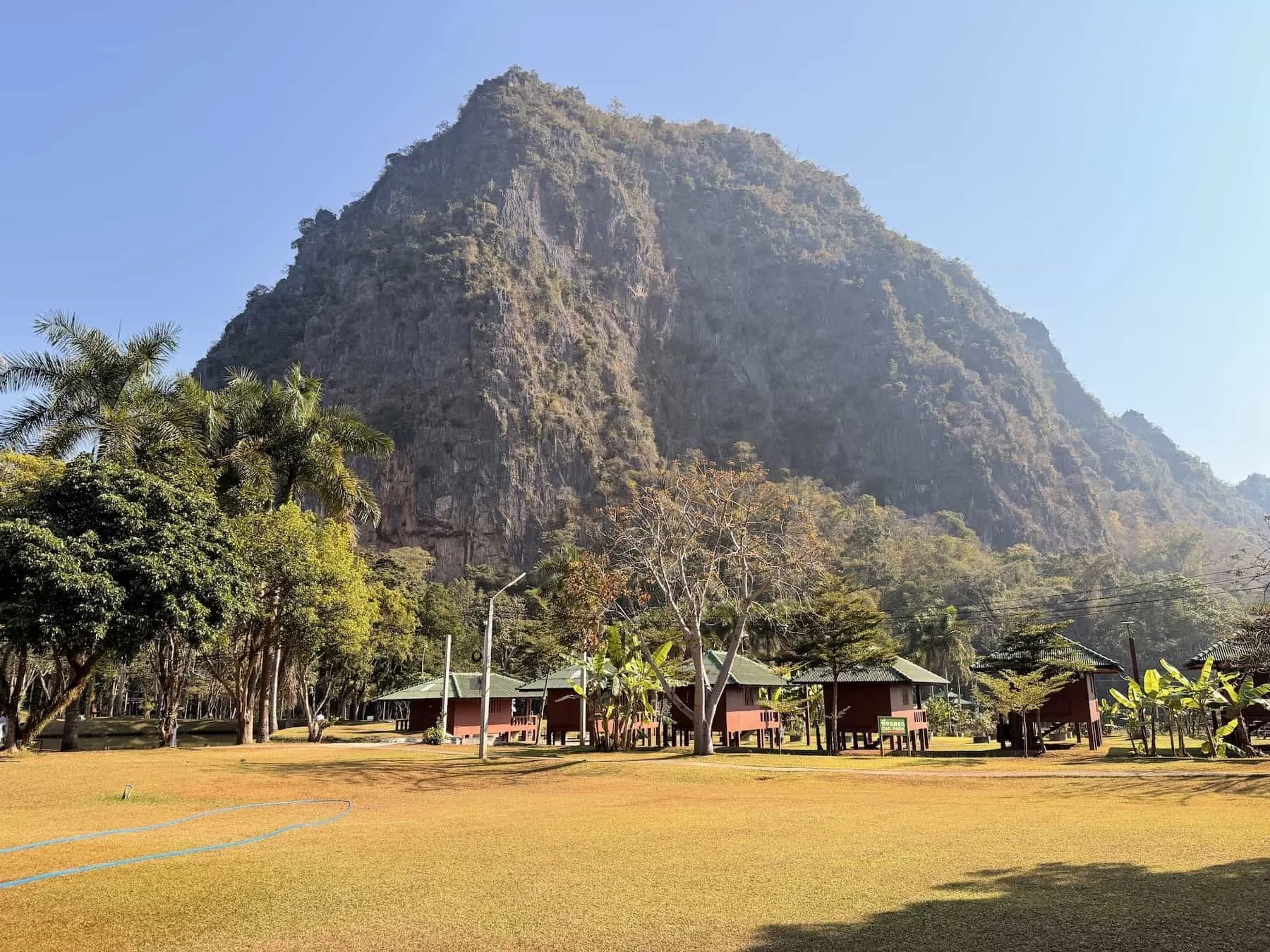
New guests normally receive dormitory accommodation. Single-person kutis are limited and cannot be reserved online. They are assigned according to current availability, length of stay and demonstrated commitment to practice. Men and women stay in separate accommodation areas and may not enter each other’s dormitories or kutis.
The monastery provides:
- a dormitory bed or, when assigned, a kuti;
- mattress, pillow, blankets and other bedding;
- white retreat clothes;
- vegetarian breakfast and lunch;
- meditation instruction and Dhamma talks in Thai and English.
Chairs are available in the meditation hall. Using one is appropriate if sitting on the floor is painful or unsuitable; no particular leg position is a test of spiritual seriousness.
Food, fasting and dietary needs
Breakfast and lunch are served, with lunch as the last full meal of the day. This reflects the Eight-Precept training followed by guests, although the monastery shows some flexibility and fruit or biscuits may sometimes be available later. Evening refreshments vary.
Monastery-prepared meals are vegetarian, but donated snacks and drinks are not always vegan and may contain milk or other ingredients. The kitchen cannot guarantee that dishes are free from nuts, gluten, dairy or other allergens. If an exposure could be dangerous, bring suitable food for your own safety and discuss storage and preparation with the information desk.
What does “free” mean?
There is no required retreat fee. Accommodation, bedding, white clothes, breakfast and lunch are offered without charge, and the monastery depends on donations and volunteer work. A donation is optional, not an entry payment or a condition for receiving teaching. If you would like to understand the local meaning of this arrangement and how to contribute appropriately, read why Wat Pa Tam Wua is free.
The Eight Precepts and conduct
Residential guests undertake the Eight Precepts: refraining from killing, stealing, sexual activity, false speech, intoxicants, eating at the wrong time, entertainment and adornment, and luxurious beds or seats. The monastery explains some practical flexibility, but smoking, drugs, alcohol, stealing and sexual activity are strictly prohibited.
White clothing should be modest. Remove shoes where requested, keep devices quiet, ask before photographing people or ceremonies, and observe the monastery’s rules for interactions with monks. Read the full conduct and rules page before arrival.
Silence, phones and daily life
Wat Pa Tam Wua is quiet but not entirely silent. Guests who wish to observe silence can request a badge, and one side of the dining hall is reserved for silent eating. Elsewhere, quiet conversation is permitted. The standard is right speech: timely, truthful, kind and not disruptive.
Phones and laptops are not surrendered at check-in. They should never interrupt meditation, chanting or another guest’s practice. Many visitors choose to limit screen use because constant messaging and scrolling work against the purpose of retreat, but this remains a matter of responsible conduct.
A strict silent course can still allow necessary communication: Suan Mokkh lists interviews and emergencies as exceptions, and Goenka courses permit speaking with the teacher and management. Check each host’s published rules before choosing a course.
What to bring
Before setting off, save the route, monastery address and onward-travel details for offline use. Tell a trusted contact your planned dates and that you may reply less often. Read the host’s published communication and device rules; if anything is unclear, ask before relying on an arrangement.
- Original identity document: passport with a valid Thai visa or entry stamp for international visitors, or a Thai ID card for Thai visitors; a copy is not enough.
- Toiletries and towel; a small shop carries some essentials.
- Necessary medication and any critical allergy-safe food.
- Modest travel clothing; white clothes are supplied for use at the monastery.
- Weather protection: a warm layer for cool mornings, rain protection in the wet season and mosquito repellent.
- Torch, charger and personal essentials, used without disturbing others.
- Cash or another suitable payment method for transport and personal purchases.
Do not arrive expecting the monastery to provide specialised health care, individual dietary catering or storage for valuable equipment. Travel simply.
Getting to Wat Pa Tam Wua
The monastery is beside Highway 1095 between Pai and Mae Hong Son. Buses, minivans and local yellow trucks use this route. Tell the driver clearly that you are going to Wat Pa Tam Wua; from the main-road stop, the walk into the monastery is about 1 km.
From Chiang Mai, travellers normally take an early service toward Mae Hong Son via Pai. Transport times change and later departures may miss check-in, so use the detailed getting-here guide and verify the operator’s current schedule. You must reach the monastery between 6:00 am and 4:00 pm. Late arrivals may be refused until the following day.
When to visit Northern Thailand
November through January usually brings cooler conditions. The rainy season makes the valley green but can affect road conditions, while the hot season requires more care with heat and hydration.
Air quality deserves separate attention. The World Health Organization reports that open burning in Northern Thailand is prevalent from February through April, though timing and severity vary each year. Check current air-quality and transport information rather than relying only on a seasonal label, particularly if you have a respiratory or cardiovascular condition.
Before you travel
- Read the rules and decide honestly whether you can follow them.
- Check the current timetable.
- Plan transport that reaches the monastery well before 4:00 pm.
- Bring the original identity and immigration documents required for check-in.
- Prepare safe food if you have a serious allergy or strict diet.
- Arrive ready to join a monastery community, not to design a private holiday schedule.
First visit in one sentence: bring the required original identity document, arrive before 4:00 pm, register at Information, accept the accommodation available, put on the supplied white clothes, and join the next required activity.
Plan your journey → · See the timetable → · Read the rules → · Visitor FAQ →
Sources
- Wat Pa Tam Wua: monastery setting, accommodation and practice
- Wat Pa Tam Wua: arrival, transport and accommodation
- Wat Pa Tam Wua: current daily timetable
- Wat Pa Tam Wua: Eight Precepts and conduct
- Wat Pa Tam Wua: food, silence and visitor questions
- WHO Thailand: seasonal air pollution in Northern Thailand