A stay at Wat Pa Tam Wua has no required retreat fee. Donations, food offerings and practical help support the monastery, so guests can receive accommodation, two vegetarian meals, white clothes, bedding and teaching without paying a daily rate. You are welcome even if you cannot donate.

What is included in a free stay?
You receive simple accommodation, bedding and white clothes for the stay, along with vegetarian breakfast at 07:00 and lunch at 11:00. White clothes are laundered. Teaching, group meditation and evening chanting are part of the same visitor programme.
Rooms are assigned on arrival. New guests normally begin in a dormitory, and a private kuti depends on availability and local priorities. Paying a donation does not reserve or upgrade a room.
There is no full evening meal. Some fruit, biscuits or drinks may be available later. Donated snacks can contain milk or eggs, and the shared kitchen cannot guarantee allergen-free food. Bring suitable supplementary food if your diet requires it.
Why does the monastery offer this?
Dana is the Pali word for giving or generosity. In Buddhist community life, lay supporters offer food, supplies, money through appropriate arrangements, and their time. This support allows monastics to devote themselves to training and teaching.
The same spirit makes a stay possible for people with different budgets. Today’s guests benefit from earlier acts of generosity and may help the next visitors in turn. It is not necessary for each person to pay back an individually calculated share.
Some Buddhists speak of giving as making merit: cultivating a generous intention and a helpful action. A donation is freely given, rather than payment for a promised blessing or meditation experience.
What does the support pay for?
The four basic monastic requisites are food, clothing, shelter and medicine. They are ordinary needs: meals must be prepared, robes maintained, buildings repaired and illness cared for.
Welcoming visitors also uses water, cleaning supplies, bedding and people’s time. Shared work and donated goods help meet these needs alongside financial support. A free stay is possible because the costs are shared by a wider community.
Do you have to donate, and how much?
No donation is required. There is no minimum contribution or daily donation rate. Cover your own transport, medication and other essentials first. If you want and can afford to give, choose an amount that is comfortable for you.
The donation box is in the small Dhamma Hall across the bridge. Use that designated box for cash. Information can explain any other current payment method if you need one. Keep money out of an alms bowl and do not place it directly into a monk’s hand.
A gift does not buy a longer stay, a particular teacher or a private room. Those arrangements depend on the monastery’s programme and available space.
How can you help without giving money?
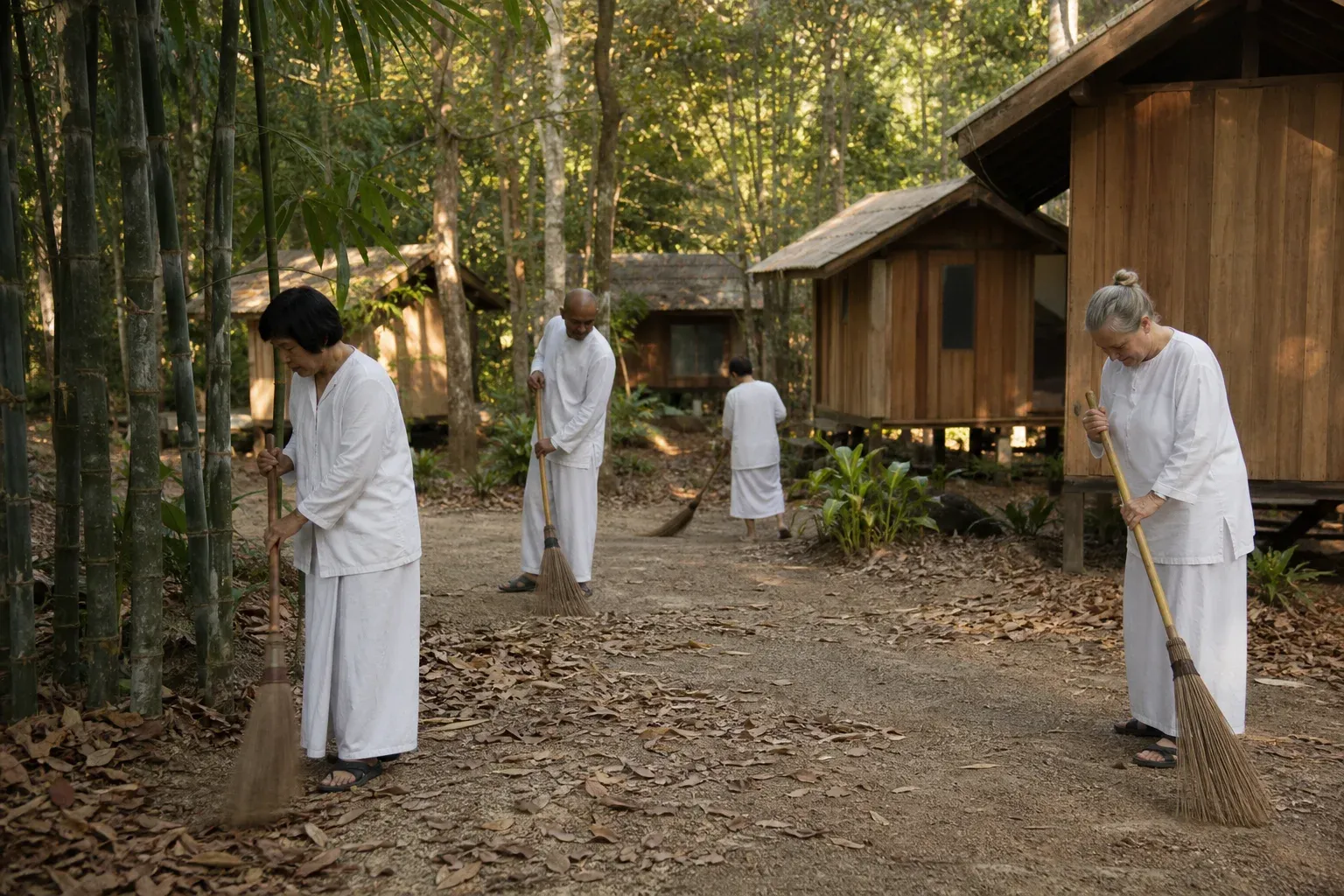
Join the cleaning period at 16:00, wash what you use and leave shared areas ready for the next person. Take sensible portions at meals, care for the supplied clothes and bedding, and avoid wasting water.
Punctuality helps too. When everyone arrives for an offering or class on time, the organisers can concentrate on the activity. Quiet device use and considerate conversation protect other guests’ practice.
This is ordinary participation in shared life, not a work-for-accommodation contract. A longer stay is not automatically earned by doing a certain number of chores.
What should you still budget for?
- Travel to the monastery and your onward or return journey.
- Toiletries, a towel and personal supplies.
- Medication, insurance and healthcare needs.
- Suitable extra food for a serious allergy or necessary diet.
- A little flexibility if transport is delayed or your plans change.
Keep the money you need to get home. An optional donation should not leave you unable to pay for essential travel or care.
How do you join the programme?
No advance booking is required. Register at Information between 06:00 and 16:00. Bring your original passport with valid entry documentation, or your original Thai ID if you are Thai. The usual stay is 3–10 days, with at least three days and two nights recommended.
Guests remain laypeople, observe the Eight Precepts and attend the required rice offering, morning class, food offering, afternoon class and evening chanting. Beginners and people of different beliefs are welcome. A free stay still comes with a shared daily routine; tell Information beforehand if illness or another serious reason prevents attendance.